The Hitchhiker’s Guide to the Galaxy, the first book (1979) in the highly popular series of comic science fiction novels by British writer Douglas Adams. The story mocks modern society with humour and has as its hero a deeply ordinary Englishman (Arthur Dent) who unexpectedly finds himself adrift in a universe characterized by randomness and absurdity.
The Hitchhiker’s Guide series is an epic parody that lampoons modern society with biting humour and pessimism. The work achieved great popularity, first as a 12-part series on radio in 1978–80 and then in a 5-book series that sold more than 14 million copies internationally. The books in the series are The Hitchhiker’s Guide to the Galaxy (1979), The Restaurant at the End of the Universe (1980), Life, the Universe and Everything (1982), So Long, and Thanks for All the Fish (1985), and Mostly Harmless (1992). The Hitchhiker’s Guide was adapted for television, theatre, and film and was used as the basis of an interactive computer program.
Adams is adventurer in his young ages then Adams conceived of the Guide while hitchhiking from London to Istanbul in 1971. Adams looked up at the stars and then at his stolen copy of HITCHHIKER’S GUIDE TO THE EUROPE and thought that someone should write The Hitchhiker’s Guide to the Galaxy. If there is a guide for who lives in Earth , why the space doesn’t have a guide? Adams wrote the Hitchhiker’s Guide To The Galaxy as a radio drama first.
We are introduced to Arthur Dent an ordinary human whose house is about to be demolished. He has a friend named Ford Prefect who looks like human but is from another planet. Ford is hitchhiker who travels the galaxy but has been stuck on Earth for years. He finds Arthur lying in front of his house and takes him away, tells him that aliens called Vogons are going to destroy the Earth in a few minutes!
Vogons destroy the Earth but Arthur and Ford manage to board the Vogon spaceship. Vogons find them and throw them out into space. At the same time, there is a new spaceship called ‘Heart of Gold’, the most advance spaceship of the time using improbability. They are saved by this ship, another important character Zaphod Beeblebrox, a thief, the president of the galaxy and also Ford’s relative is on the ship. Trillian a women we later learn is also human is with him, with a robot named Marvin who acts like a highly depressed human being.
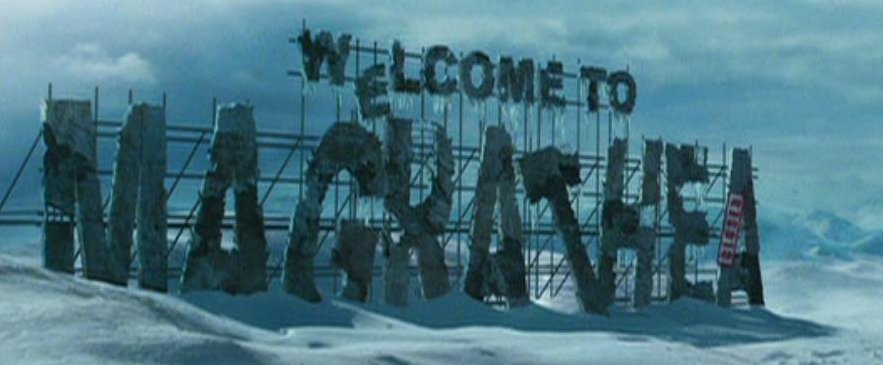
They land on a planet called Magrathea which looks deserted. The planet used to be very rich but it has been sleeping for a long time. We meet an old man called Slartibartfast, he explains the history of Magrathea and Earth.
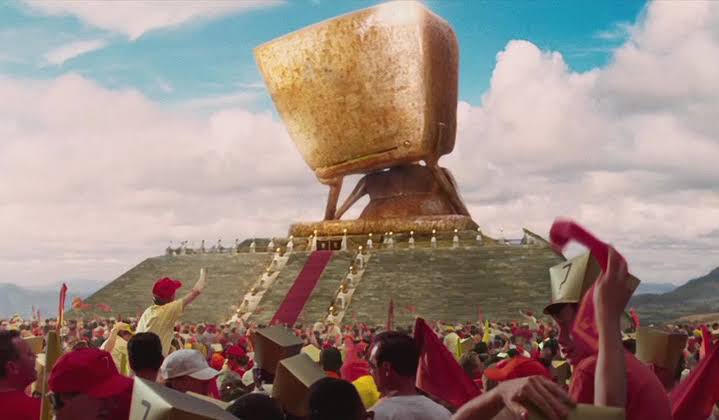
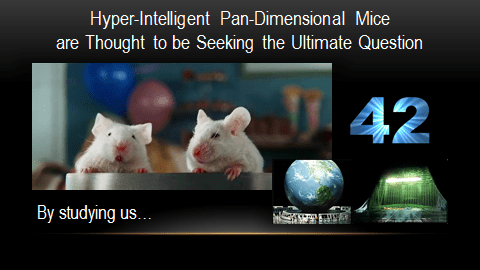
We learn that some creatures build a computer called ‘Deep Thought’ because they wanted to find out the answer to life and the universe. This takes 7.5 million years and gives the answer 42! They don’t understand this so they design the Earth which is also a computer to find out more…
10 million years past but Vogons destroy Earth 5 minutes before the answer comes out. We learned that mice are powerful and that they want to buy Arthur’s brain. Arthur and his friends escape the book ends but the story doesn’t. The book is followed the second book in the series…
The book features great examples of criticism regarding city planning. It takes city planning further to luxury planet building or even designing continents!
For example, the Planet Magrathea becomes the richest planet of all-time because they specialised in the industry of custom-made luxury planet building. Their engineers (sadly not city planners) build dream planets for extremely rich and successful people however they want them; gold planets, pink seas or even soft rubber planets with lots of earthquakes etc. But this leads to an economic breakdown of the galaxy.
In an other example, a character says ‘I design coastlines, I got an award for Norway!’ The character even wants to use his favourite fjords to design a new continent of AFRICA but gets rejected by authorities!
The author’s ideas for planning are highly creative and full of irony as you can see.
The Hitchhiker’s Guide to the Galaxy considered a cult classic with over 15 million copies sold. My first impression after reading the book, was how it felt like a series of questions but not a complete story.
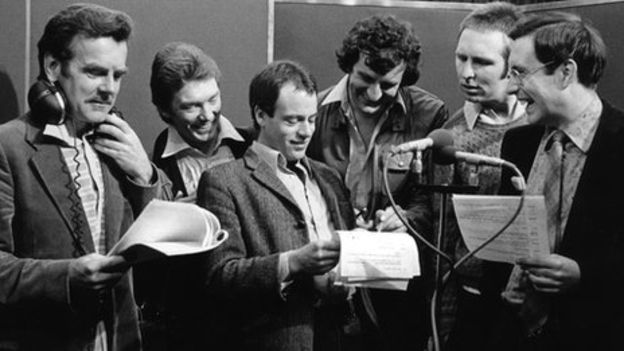
Almost like, a troubled mind asking questions but not finding satisfactory answers. After reading background information about the book I learned that it was originally a radio comedy broadcast on BBC Radio 4 in 1978! This explains the books format and the feeling of incompleteness.
In other cult classics like 1984 by George Orwell or famous science fiction books of Jules Verne, A Brave New World by Aldous Huxley and Automatic Piano by Kurt Vonnegut etc., the stories are constructed from beginning to end. Characters are more detailed and there is feeling of conclusion at the end of this books.
1977 was the year the sci-fi film Star Wars came out. Technology fan Douglas Adams, would surely had seen it. His book reminds the film with all the galactic travel, spaceships etc.
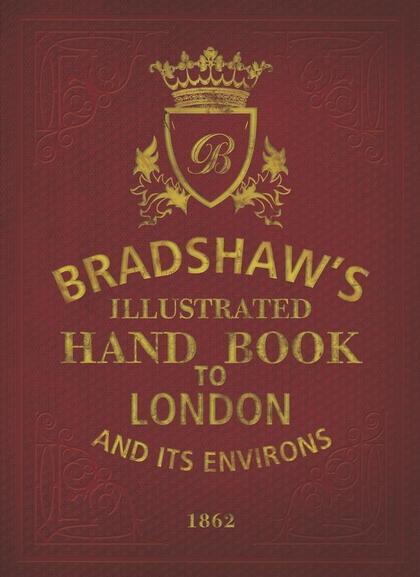
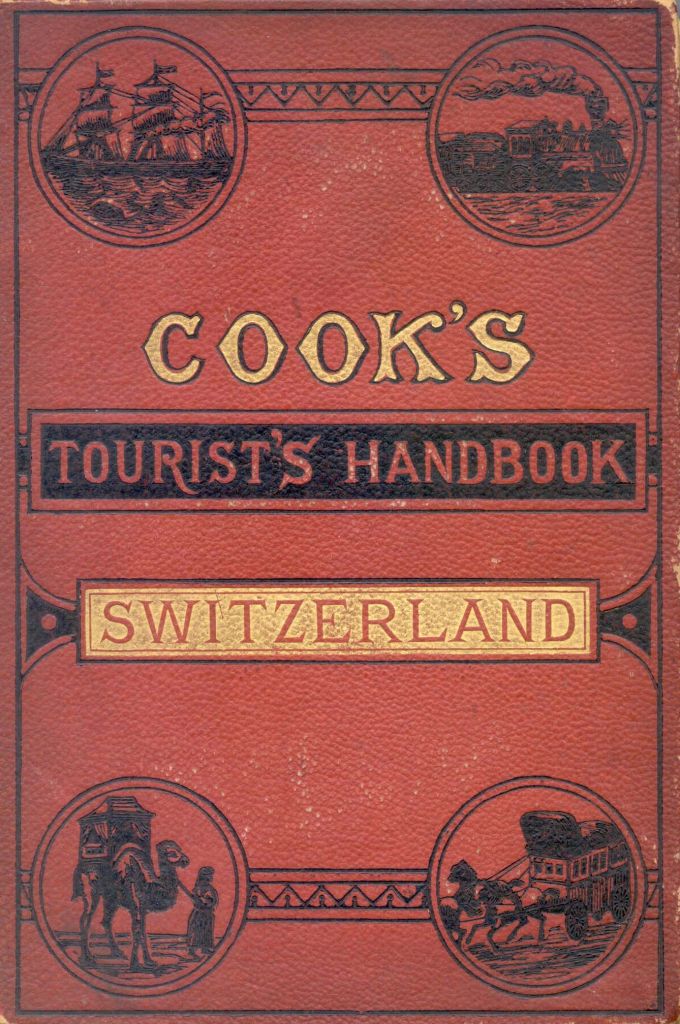
Also the idea of a guide reminds us of very famous 19th century travel guidebooks by Thomas Cook or George Bradshaw. These two were extremely popular guidebooks used by travellers of 1800s. Douglas Adams himself got the idea for his book lying down watching the stars with a guidebook in his hand.
There is an expression ‘You can take the boy out of the country, but not the country out of the boy’. This book proves this theory.
The writer questions everything from the universe to life but his belief in 3 things never changes. Towels, tea and pencils… Without and background information my first thought was the author is definitely British.
FACT CHECKED: He is from Cambridge, Great Britain!
It seems like, questioning everything has made him stick to comforting everyday items; rather than beliefs. He can’t answer his own questions but considering the year in which he wrote this book (1979), his futuristic technologic predictions are almost all correct. Sub-etha sens-o-matic is almost identical to modern-day phones or tablets using Google. He gives the impression of a technology fan.
FACT CHECKED: He was one of the first users of Macintosh computers!
Suprisingly, the book features galactic travel but the characters still use the pencils when they want to. Showing that the writer can’t let go of the traditional methods.
Last but not least, characters in the book experience unbelievable things but we see the writer’s wish for a comforting element in his use of towels.
FACT CHECKED: Fans of the author carry a towel on 25th of May, intribute to Douglas Adams every year!
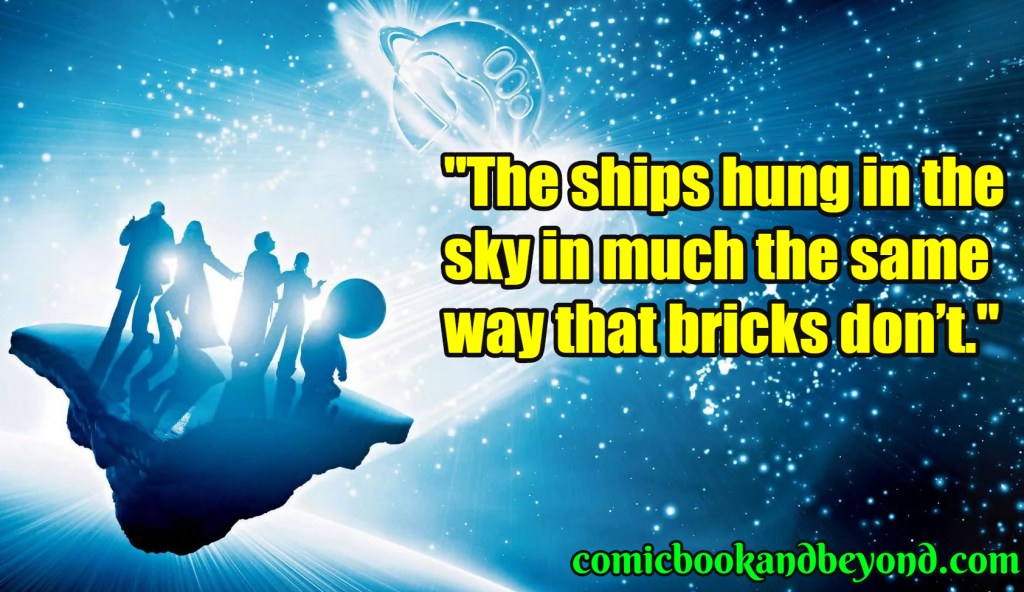
” The ships hung in the sky in much the same way that bricks don’t. ”
In fact, with this simile, Douglas Adams wanted to give information about how the Vogon ship appeared in space. He did not seek any concrete basis in his comparison of the position of the ship in space with a (gravity-influenced) brick. In fact, Adams made a random and strange claim here, and it made sense to us. Therefore, it is quite a catchy metaphor.
” The effect of drinking a Pan Galactic Gargle Blaster is like having your brains smashed out with a slice of lemon wrapped round a large gold brick. ”
This is a typical simile that come out in the novel. The key point of his simile is strange comparison. Something unfamiliar with comparing becomes more familiar. Here ‘the alien coctail’ which is an unfamiliar thing is compared with the another unfamiliar thing ‘the experience of brains smashed out’ .
Douglas Adams usually gives place to metaphors, similes, and sharp ironies in his book.
Adams makes comparisons in his book very interesting way. It is his writing style that makes reading the Hitchhiker’s Guide to the Galaxy enjoyable.
They asked a Ultimate Question of Life, the Universe and Everything to Deep Thought. Deep Thought replied that: 42
If we need to attribute a meaning to number of 42 binary code system comes first cause the machine gives the answer of Ultimate Question of Life, the Universe and Everything. In a binary code system 42 correspond to 101010 that means exist- nonexist- exist- nonexist- exist- nonexist.
42 means “4 (for) and 2 (to) in separatedly. For moving forward you have to give back. If we divide 42 in 2 equal parts. 21 means “to only one” and 1 refers to ourselves. 2 refers to society.
If we multiply 4 and 2 we get 8. 8 seems like infinity. So life give infinite opportunity for us
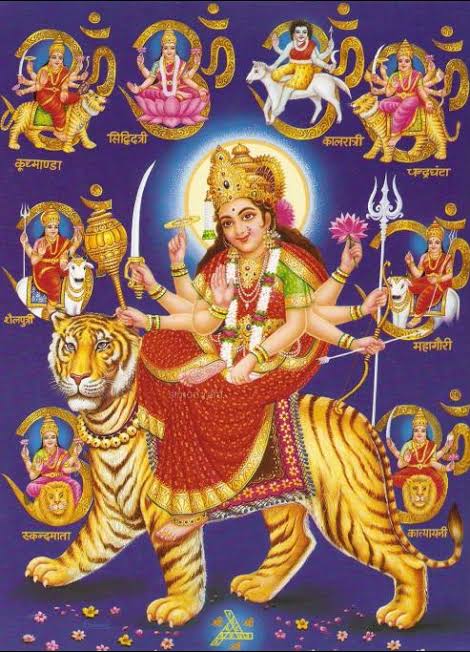
And there is also different meaning in different religions
Hinduism/ Sanatana Dharma: Universe is formed of two halves: Shiva and Shakti. They together denote “Creation”, “Life” which is the most peculiar quality of our universe. It is what keeps Universe going on and on for billions of years, be it any species.
Islam: Its very straight forward here because of the divine number 786. Some believe it to be a representation of Sanskrit Om, which is the divine vibration which created universe. 7 + 8 + 6 = “21”.
Christianity: The Holy Trinity which is also present in Hinduism too as in Brahma-Vishnu-Mahesh, it gives “3” (2+1).
(Chandra, 2016)
The answer to this is very simple,” Adams said. “It was a joke. It had to be a number, an ordinary, smallish number, and I chose that one. Binary representations, base 13, Tibetan monks are all complete nonsense. I sat on my desk, stared in to the garden and thought 42 will do. I typed it out. End of story.
While reading the book, some important questions that we examinated or did not think too much were remarkably stressed by the author. The Hitchhiker’s Guide to the Galaxy, is full of new things for us to experience. It is in the best sense, a mind-expanding experience.
The book is an exciting adventure, and also it contains themes such as power, politics and discovery that are dark and mysterious side. Therefore, these themes are always the subject of curiosity. In this novel, blending with absurd comedy and philosophical thought gives us an unforgettable experience.
DISCOVERY
Curiosity and Discovery are essential parts of existence.
What role does curiosity play in exploration?
Do characters explore beacuse they are curious or for other reasons?
Do some characters get forced into exploring?
The discovery of different living things and lives outside the world in the universe is a big step for Arthur Dent. When his home and planet were destroyed, he left his comfort area and he started to explore the space, other planets and living beings, the advanced dimension of technology and even the universe, is a bit creepy and new for Arthur but also he learns new lessons on the exciting adventure.
POWER
In the universe, power is governed in two ways, apparently and in the background.
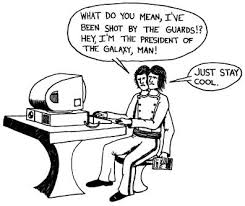
In the novel, although Zaphod Beeblebrox is the President of the Galaxy, he does not know why he is the president. We could think of him as the screen face of power. As President of the Galaxy, his responsibility in that position was to draw attention away from the real rulers of the universe. In fact, The President’s role here is curious. All we know is that power is something Zaphod doesn’t have. Adams were never told who really has the power in this government.
Prosser:”But the plans were on display… Arthur Dent: I eventually had to go down to the cellar to find them. P:That’s the display department. A:With a flashlight.” P:”Ah, well the lights had probably gone. A:So had the stairs. P:But look, you found the notice didn’t you? -“Yes,” said Arthur, “yes I did. It was on display in the bottom of a locked filing cabinet stuck in a disused lavatory with a sign on the door saying ‘Beware of the Leopard.'” (Chapter 1, page 8-9)
There’s the absurd bureaucracy that would destroy a house or a planet without letting anyone know. Here we can understand politics and the dark side of politics!
After reading this back-and-forth between Arthur and Prosser we think that politics is good and useful when people communicate with each other and listen to each other. Politics cannot be mentioned in an environment where people only talk but no one cares about events or people. In Hitchikers Guide to Galaxy, living in a political society is a form of concession and squalidity.
If we analyze the power theme from another angle we can say that mice and dolphins are smarter than people and as people think they are not intelligent. These two discourses change the perception of power.
Another fun fact in the book is,
The second smartest computer in the universe needs millions of years to find the answer to ‘a question’.
The concept of power varies according to all these perspectives and illusions.
Be prepared for the facts you think you know to be wrong and the mistakes to be true !
PERSPECTIVE
Each character’s spaces, events and ways of perceiving change. We can try to understand different perspectives through the relationship of characters with each other and with spaces.
RELATION OF PLANETS – CHARACTERS – PERSPECTIVES IN THE NOVEL
Arthur’s house is a part of life for him. Therefore, he is upset because it will collapse. The person who will destroy the house sees Arthur’s house as an obstacle only to make a bypass.
All characters have different ways of perceiving space.
According to Arthur and other people, the Planet Earth is the only thing they knew. However, Earth was destroyed by the Vogon fleet to build a galactic freeway. Destroying the Earth, life or history were not mean anything to them because they perceived the Earth as an obstacle for the freeway.
What does the Planet Earth mean to Ford Prefect?
Ford Prefect had been trapped in the Earth for 15 years and had tried to keep up with it as much as possible, but this world is still boring for him. and he wanted to escape from the world.
What were the idea of dolphins and mice for the Earth and Humans?
According to Dolphins:
On the Planet Earth, man had always assumed that the was more intelligent than Dolphins . However, the dolphins were aware that this idea was not true. They knew they were smarter than humans and unlike humans, they have realised that the Earth would destroy. Thus, they left the Earth shortly before the Vogons arrived.
The fact that once again human completely misinterpreted this relationships was entirely according to mice’s plans. There was only one species on the planet more intelligent than dolphins: MICE. The mice used to make experimental observations in the Earth’s laboratories, making them think that the human species were the ones who did the experiment. In short, the Planet Earth is just the answer to ‘the question’ for mice.
Also for Arthur who is from Earth, the Planet Magrathea is a strange world and a dump. However, for the aliens the Planet Magrathea is an ancient and the richest planet in the galaxy. On the other hand, for Zaphod Beeblebrox, The Planet Magrathea means curiosity, a new adventure, money and fame.
Adams takes heart us to think from different perspectives and to overcome our designated views. He invites us to think about the infinite conditionsand oddness outside the part of the universe we know.


 THE HITCHHIKER'S GUIDE TO THE GALAXY